
AI agents for small business, minus the hype
An agent is not a chatbot with better marketing. It is software that decides something, which is exactly why it needs a documented process and a human checkpoint.
Every tool you own has added an agent this year, and the demos all look the same: a prompt, a pause, and a finished piece of work. Then you try it on your own process and it books the wrong slot, invents a price or produces something nobody can sign off.
The technology is real. The framing is the problem. An agent is not a smarter chatbot, and buying an AI platform is not a strategy. Here is the version we would tell you across a table, including the parts where we would advise you not to bother.
Chatbot, workflow, agent: the distinction that matters
| What it does | Good at | Breaks when | |
|---|---|---|---|
| Chatbot | Holds a conversation and answers from a knowledge base | FAQs, qualification, booking, intake | Asked something outside what it was given |
| Workflow automation | Runs fixed steps in a fixed order on a trigger | Moving data, invoices, reminders, reporting | A step needs judgement or the input is unstructured |
| AI agent | Decides which steps to take to reach a goal, using tools | Messy input, structured output, multi-step tasks | Nobody defined the boundaries or checked the output |
Most business problems are solved by the first two. If your process is “when X happens, do these five things”, you want a workflow, and the n8n automations worth building first will get you there faster and cheaper than any agent. If your process is “when X happens, someone reads it and decides”, that reading-and-deciding step is where an agent belongs, usually sitting inside a workflow rather than replacing it.
The useful test: does the task need judgement about what to do, or only reliability about how? Agents are for the first. Workflows are for the second, and they are more predictable, cheaper per run and easier to debug.
Where agents genuinely work today
Six patterns we have put into production, all with the same shape: messy input, structured output, human checkpoint.
Triage. An agent reads an inbound enquiry, email or form, works out what it is about, how urgent it is and who should own it, then tags and routes it. Low risk, because the worst case is a misrouted message a person can move.
Extraction. Documents, invoices, resumes, scanned forms, PDFs nobody wants to read. The agent pulls out named fields and writes them into a system. This is the single highest-return use for most businesses, because it replaces reading and retyping.
Drafting for approval. Proposals, quotes, review replies, follow-up emails. The agent writes into your template and a person publishes. The time saved is real and the risk is contained by the approval step.
Scoring and shortlisting. Candidates against a job spec, leads against an ideal customer profile, enquiries against capacity. Agents are consistent in a way tired humans are not, which is their underrated advantage.
Pre-call research. Before a sales call, the agent assembles what is publicly known about the company, the recent news and the likely objections into a one-page brief.
Reporting summaries. Pull the numbers, compare to last period, write three sentences on what changed and what looks broken. The numbers come from the data, not the model; the agent only writes the commentary.
Where they fail, and should not be trusted
Be as specific about this as about the wins. We will not build an agent that:
- Commits to a price or a discount. Quoting a published range is fine. Negotiating is not.
- Gives clinical, legal or financial advice. A qualification bot can collect symptoms as free text for a clinician; it cannot interpret them.
- Makes the final hiring or rejection decision. Scoring and shortlisting, yes. Deciding, no.
- Publishes anything a customer sees without review. Public review replies and social posts get a human approval step, always.
- Moves money or changes a contract. Flagging an anomaly is useful; acting on it is not.
- Runs a process nobody has written down. You will automate the confusion and it will scale.
There is a quieter failure mode too, and it causes more damage than the dramatic ones: the agent handles 95% of cases well and the remaining 5% badly, silently, for three months. Edge cases are where the cost lives. That is why every agent we ship logs its reasoning and its output, alerts a person on low confidence or unexpected input, and gets its outputs sampled weekly for the first month.
What has to exist first
Three prerequisites. Skip any one and the project fails for reasons that have nothing to do with AI.
Data you trust for this decision. Not a perfect CRM. Specifically the fields this agent will read. If two people in your team would disagree about what a status field means, the agent will pick a meaning and act on it consistently, which is worse than inconsistent humans because nobody notices.
A process someone has written down. Numbered steps, the inputs, the decision rules, the exceptions and who currently handles them. Writing this down takes an afternoon and usually finds two steps that exist only because someone left in 2022. It is also the only way to brief an agent properly, because you are encoding judgement that currently lives in somebody’s head.
A named human checkpoint. One person, by name, who reviews the output at a defined frequency and owns the decision to widen or narrow the agent’s remit. “The team will keep an eye on it” means nobody will.
If you have none of the three, your first project is not an agent. It is documenting one process and fixing the fields it depends on, and that work pays off whether or not you ever build anything.
Start with one process, not a platform
The failure pattern we see most is buying an AI platform and then looking for problems to feed it. Reverse it:
- Pick one process you run at least ten times a week, where someone currently reads something and decides what to type next.
- Write the before number. Minutes per run, error rate, how long the queue gets. Without this you will never know if it worked.
- Define the output precisely. Exact fields, exact format, where it gets written. Vague outputs produce vague agents.
- Build a test set of 20 real cases, including the three awkward ones everybody remembers.
- Run it alongside the humans for two weeks. The agent produces, the person decides. Compare.
- Widen the remit only where the test set holds. Automate the clear-cut cases fully, route the rest to a person.
- Keep the failures in a file and re-run them every time you change the prompt, the model or the tooling.
Expect one to three weeks for a single well-scoped process, most of it spent on steps 1 to 4 rather than on the model. One working agent teaches your team more than a year of platform evaluation, and the second one takes a fraction of the time because the plumbing already exists.
What this looks like when we do it
Recruitment is a clean example. Resumes arrived by email and form, and recruiters were opening every one, copying details into a spreadsheet and ranking from memory. We built an AI resume screening automation where OCR extracts the text including from scanned PDFs, an AI step pulls out skills, experience, education, location, salary expectation and notice period, each profile is scored against the job requirements, and candidates above the threshold are shortlisted with an instant recruiter notification. Manual screening time fell by more than 80%, and the humans still make the hiring decision.
On the sales side, our n8n AI proposal generator turns a short post-call form into a personalised Slides proposal sent within seconds, written into a fixed template so it stays on-brand. Both sit inside n8n workflows with error handling, which is the pattern we recommend: a workflow for the plumbing, an agent for the judgement step, a person at the gate.
The decision in front of you
You do not need an AI strategy. You need to know which single process in your business involves a person reading something and deciding what happens next, more than ten times a week. That is the only candidate worth starting with, and if the answer is “none of them”, your time is better spent on plain workflow automation or a conversational assistant on the front door.
If you want help working out which process is worth it and which should stay human, that is what the free audit covers: we look at your tools and process beforehand, 30 minutes, and you keep a one-page plan whether you hire us or not.
Common questions
What is the difference between an AI agent and a chatbot?
A chatbot answers questions in a conversation. An agent completes a task: it gathers information, uses tools, processes documents, updates systems and produces an output such as a scored candidate, a drafted proposal or an updated record. The practical difference is that an agent takes actions, so it needs guardrails and a human checkpoint.
What can AI agents realistically do for a small business today?
Triage incoming enquiries, extract data from documents and emails, draft replies and proposals for approval, score and route leads or applications, research a prospect before a call, and assemble reporting summaries. All of these share a shape: messy input, structured output, and a person who checks before anything irreversible happens.
Where do AI agents fail?
Anywhere the cost of a confident mistake is high: pricing commitments, legal or clinical advice, final hiring decisions, anything published without review, and any process nobody has documented. They also fail quietly on edge cases, which is why error alerts and a review file matter more than the model you choose.
Do I need clean data before using AI agents?
You need data you trust for the specific decision. An agent scoring leads needs reliable source and stage fields, not a perfect CRM. The honest test is whether two people in your team would agree on what a record means. If they would not, fix that first, because an agent will act on the confusion faster than a human would.
How much does an AI agent cost to run?
There are three costs: the build, the model usage per run, and the maintenance. Model usage is usually the smallest of them. The build takes one to three weeks for a single well-scoped process, and maintenance means someone reviewing outputs weekly at first, then monthly, plus re-testing when you change the model.
Proof from our work
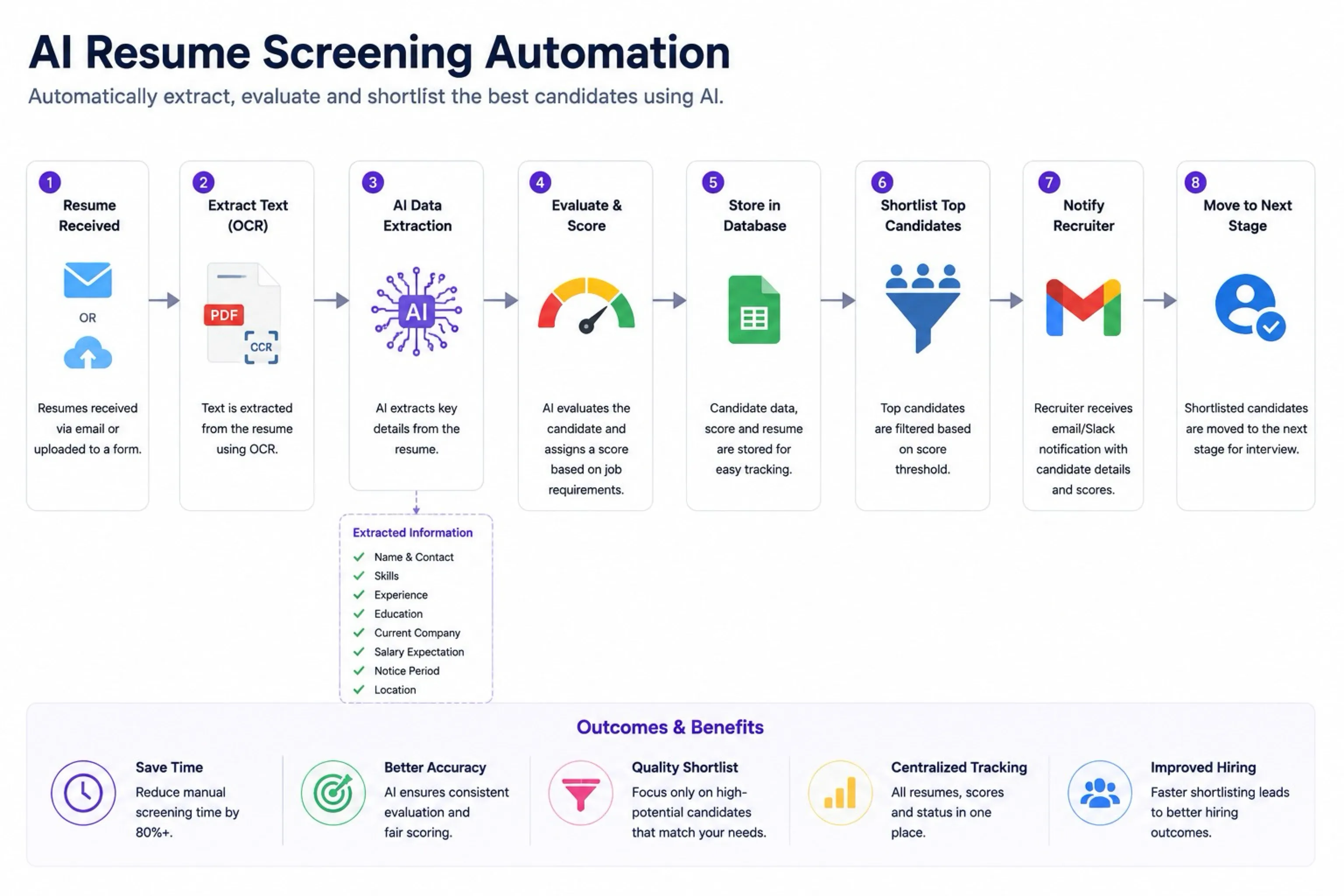
Manual screening time for incoming resumes
A custom n8n recruitment automation that processes every incoming resume: text is extracted with OCR, an AI step pulls out skills, experience, education, location, salary expectations and notice period, and each profile is scored against the job requirements. Qualified candidates are stored, recruiters are notified and top applicants are shortlisted automatically.
Read case study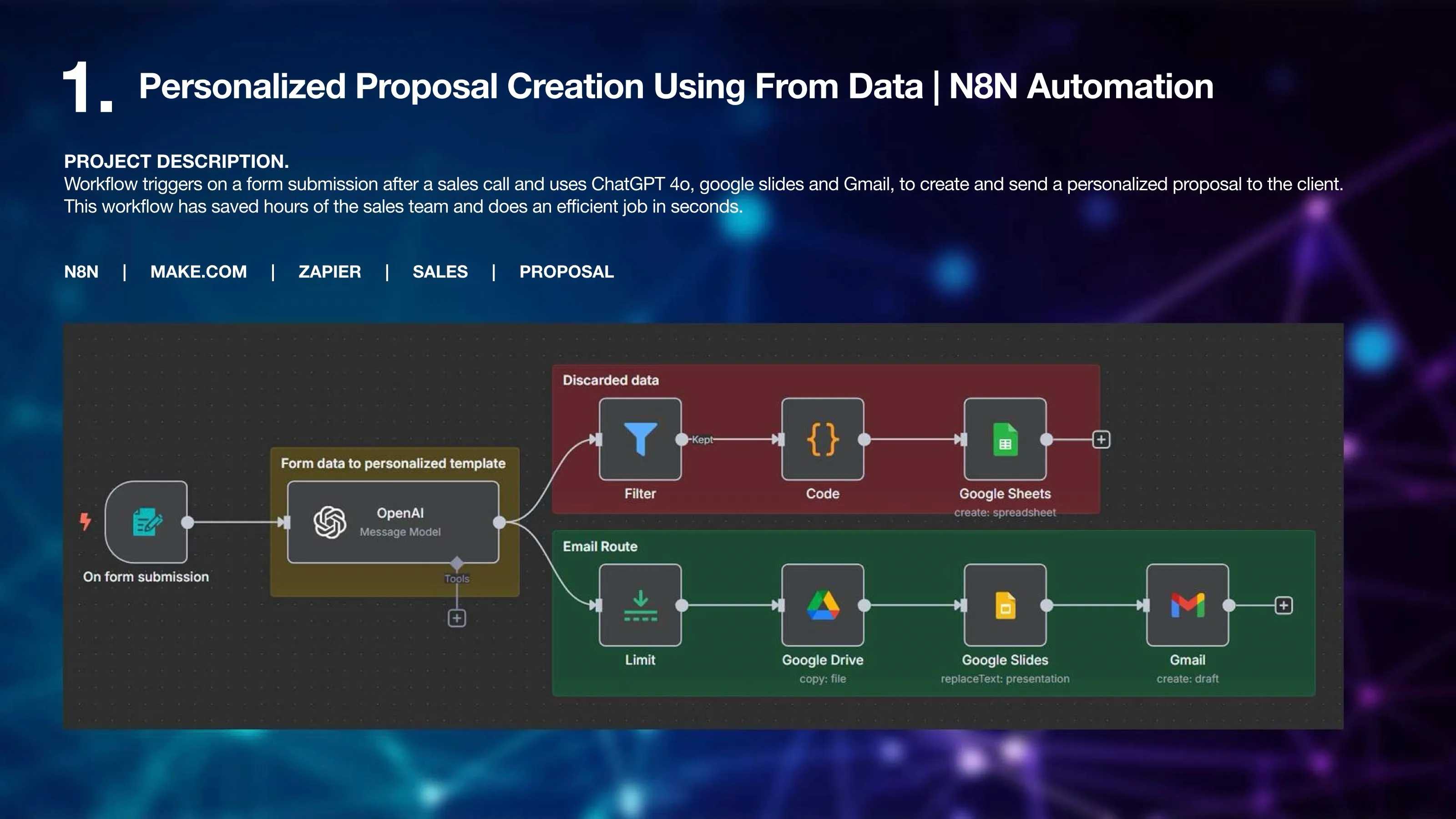
To send a personalised proposal, down from hours
An n8n workflow that triggers on a post-call form submission, uses GPT-4o to turn the notes into a personalised proposal in Google Slides and sends it through Gmail. Hours of sales-team work now happen in seconds.
Read case study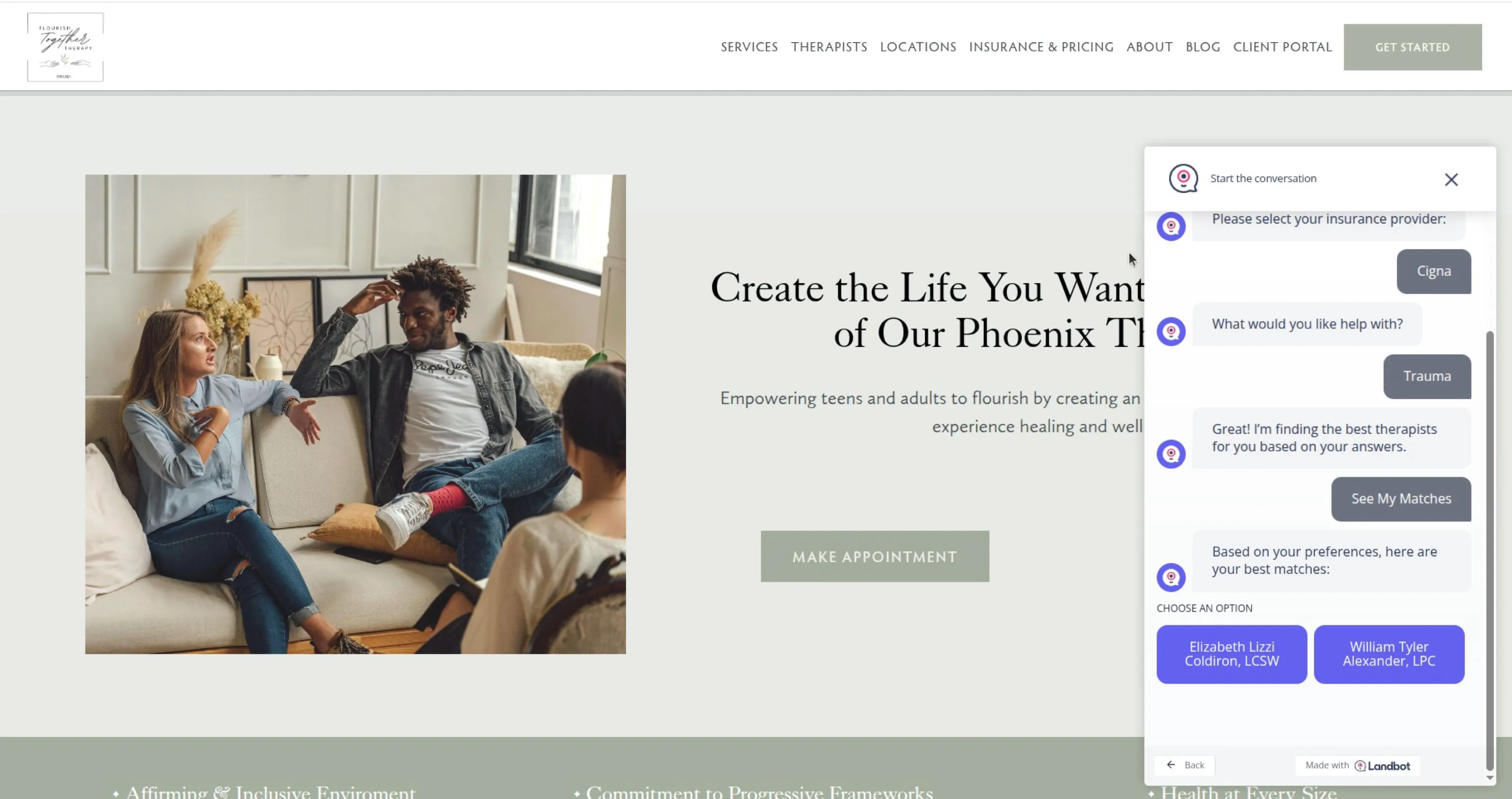
Intake form completion vs the old form
A conversational chatbot for a therapy practice that qualifies prospective clients, matches them to the right therapist, shows insurance options and captures location in a friendly chat flow. Intake completion tripled.
Read case study