
How AI UGC ads get made, and where they still fail
AI-generated creator-style video makes weekly creative testing affordable. It also looks obviously wrong in a few specific situations, and knowing which is the whole skill.
Creative is the constraint in paid social now, not targeting. You need new angles every week, and a filmed creator video takes briefing, seeding, shipping, waiting and revisions before you learn whether the hook even worked. AI UGC exists to shorten that loop, not to replace good creative judgement.
What AI UGC is, and what it is not
It is a short vertical video in the grammar of a creator review: someone talking to camera, product in hand or in frame, captions burned in, under 30 seconds. The difference is that the presenter, the setting and sometimes the voice are generated rather than filmed.
It is not a shortcut past strategy. The generator does not know your customer’s objection or which benefit sells. It also will not make a weak offer work, and it is not a replacement for genuine social proof. Treat it as a way to produce more candidates for testing, and keep the testing honest.
Write the script before you open a tool
Every AI UGC ad we ship starts as four lines on a page.
- Hook, first two seconds. A problem stated out loud, a visual surprise, or a direct address to a segment (“if you train in the morning and your leggings roll down”). No logo, no brand name, no slow pan.
- The turn. What changed, in one sentence, with the product on screen as it is said.
- One objection answered. Price, fit, durability, delivery, or “does it actually work”. One, not four.
- The action. A specific next step, not “shop now” floating over a sunset.
Pull the raw material from your own reviews, support tickets and the questions people repeat in DMs. The angles that win are almost always paraphrased customer language, not copywriting. Write five scripts, not one, because the whole point of the format is that you can afford to test all five.
Build a presenter you can reuse
Consistency is what separates a usable set from a pile of uncanny clips. Generate one presenter and one setting, then keep them fixed across the set: same face, same room, same lighting, same wardrobe register.
That is the pipeline behind the activewear AI UGC video ad: a short scripted storyline set in a lift, a consistent AI model, lip-synced dialogue over a natural voiceover, and a vertical cut for Reels and TikTok. The character and setting then carry into the next variations, which is why the second and third videos take a fraction of the time the first one did.
Practical rules we use:
- Lock a reference image of the presenter and reuse it as the seed for every scene.
- Keep shots short, two to four seconds, and cut on movement. Long continuous shots are where generated video drifts.
- Keep the product in a stable position. If it is in frame, it should not change proportions between cuts.
- Shoot your own product footage for the hero shots and generate the human. Hybrid sets hold up far better than fully generated ones.
Lip sync, voiceover and the tell-tale mistakes
Record or generate the voice first, then sync to it. Scripts written for the eye read badly aloud, so say each line out loud and cut the clause that makes you run out of breath.
Where these ads give themselves away:
- Mouth shapes lagging the audio. Fix by trimming the clip to the sentence rather than the sentence to the clip.
- Flat prosody. Synthetic voices need punctuation to breathe. Short sentences. Deliberate full stops.
- Dead eyes and a static frame. Add a small push-in, a cutaway to product footage at second four, and a caption change on the beat.
- Pristine audio. Creator video has room tone. Perfectly clean voiceover over a perfectly lit face reads as an advert, which defeats the format.
Our toolkit for this is ordinary and worth naming: generation and lip sync tools such as HeyGen, Veo and Seedance, ElevenLabs for voice, CapCut for the edit. The tool list changes every quarter; the sequence does not.
The vertical edit
Export at 9:16, 1080 x 1920, and keep anything important out of the top and bottom 15% where the platform’s own interface sits. Burn captions in rather than relying on auto-captions, because a meaningful share of views are muted and platform captions get cropped. Keep the cut under 25 seconds for cold testing, and end with a card that names the offer and the action.
Produce three hook variations of every winning body. Changing the first two seconds and leaving the rest intact is the cheapest test in paid social, and it is where most of the gains are.
What it costs next to creators and shoots
Be precise about which costs disappear. AI removes the per-video creator fee, product seeding and shipping, the shoot day with its studio, crew and travel, and the two to three weeks of waiting. What replaces them is a set of monthly tool subscriptions and an editor’s time.
The shape of the cost is what matters: tool subscriptions are mostly fixed, so once a presenter and setting exist, each additional variation is near-marginal. That is the difference between testing two creatives a month and testing eight to twelve, which is roughly where creative testing starts to compound. Our own AI video packages start at eight video ads a month with three hook variations each, for exactly that reason.
| Filmed creator | Studio shoot | AI UGC | |
|---|---|---|---|
| Per-video cost | Creator fee each time | Day rate spread over the set | Near-marginal after the first in a set |
| Lead time | 2–3 weeks | 3–6 weeks including planning | Days |
| Product needed | Seeded and shipped | On set | Your own product footage only |
| Variations | Re-brief and re-shoot | Limited to what you captured | Unlimited against the same presenter |
| Best at | Authenticity, real use, fit | Hero imagery, brand film | Hooks, angles, explainers, volume |
The cost that does not disappear is judgement. Somebody still has to write the angles, read the results and kill the losers, which is the weekly rhythm our paid media work is built around.
Where AI UGC still looks wrong
We turn this format down regularly. Do not use it for:
- Close product handling. Generated hands fail at unscrewing a lid, applying a cream or lacing a shoe.
- Results on a body. Before-and-after on skin, hair or teeth. Use real footage, or do not make the claim.
- Food and texture. Melting, pouring, steam and crumb are where generation looks plastic.
- Fit and drape. For apparel, a generated model cannot tell a shopper how a garment sits on a real body. Pair AI hooks with real fit footage instead.
- Anything implying a real customer. A generated person saying “I have used this for three months” is a fabricated testimonial, whatever the tool’s terms allow. We will not script it.
Our AI UGC work for skincare and DTC brands is explicit about this: the presenters are illustrative, and the format is used for hooks, demonstrations and concept testing, with real footage where authenticity carries the claim.
Disclosure and platform policy
Meta and TikTok both have AI-content disclosure rules, and both have changed them more than once. Check the current wording in each platform’s advertising policies before you launch rather than trusting a blog post, including this one. Our standing practice is to disclose where the platform offers a label, keep the presenter visibly stylised rather than passing as a named real person, and never put a performance or health claim in a generated mouth that we could not put in body copy.
Two more that are policy in our shop regardless of what platforms require: no generated likeness of a real person without written permission, and no generated review or rating.
Why this makes weekly testing affordable
Creative testing works when you can retire a loser without flinching. If a video costs you a creator fee and three weeks, you will defend it; if it cost an afternoon, you will cut it on day four and move the budget. That is the real mechanism, and it is why creative supply tends to show up in account performance before any targeting change does.
Set it up as a cadence: five scripts a week, three hooks on each winner, one clear naming convention so the data is readable, and a weekly review where the bottom half of the set is turned off. Scaling an apparel account to a $26.8K daily budget at 389% blended ROAS ran on that loop, with new statics and video every week and losers cut early.
What this looks like when we do it
Week one we write angles from your reviews and objections, build one presenter and setting, and ship a first set with hook variations. Week two onward we add variations against the winners and retire the rest, with AI video and UGC production feeding straight into the campaigns rather than sitting in a folder. The activewear ad is a fair example of the first week’s output, and it is reusable rather than a one-off.
What to decide now
If your account has been running the same three creatives for two months, your next gain is almost certainly creative supply rather than bid strategy, and AI UGC is the cheapest way to get it. If your clicks are fine and the sales are not, creative volume will not save you, and why Meta ads get clicks but no sales is the more useful place to start. Fashion and beauty brands can see how we combine this with store and email work on the e-commerce and fashion page, or bring your ad account to the free audit and we will tell you which of the two you are dealing with.
Common questions
What are AI UGC ads?
Short vertical video ads in the style of a creator review, made with AI tools instead of a filmed creator: a scripted hook, an AI-generated presenter, a synthetic or recorded voiceover, lip sync, and an edit with captions. They are used for paid social testing where volume of angles matters more than production value.
How much do AI UGC ads cost compared with a creator?
The two costs AI removes are the creator fee per video and the shoot day, including product seeding and shipping. What replaces them is tool subscriptions plus an editor's time, which is largely fixed, so the cost per additional variation falls sharply after the first one in a set.
Will people notice the ad is AI?
Often, yes, and that matters less than whether the ad is coherent. Audiences tolerate a stylised presenter; they do not tolerate melting hands, a product that changes shape between shots, or a claim that sounds like a testimonial from someone who does not exist.
When should I use a real creator instead?
Use a real creator for close product handling, before-and-after results on skin or hair, food and texture, fit and drape on a real body, and anything positioned as a genuine customer testimonial. Use AI for concept testing, hook variations, explainers and problem-led storylines.
Proof from our work
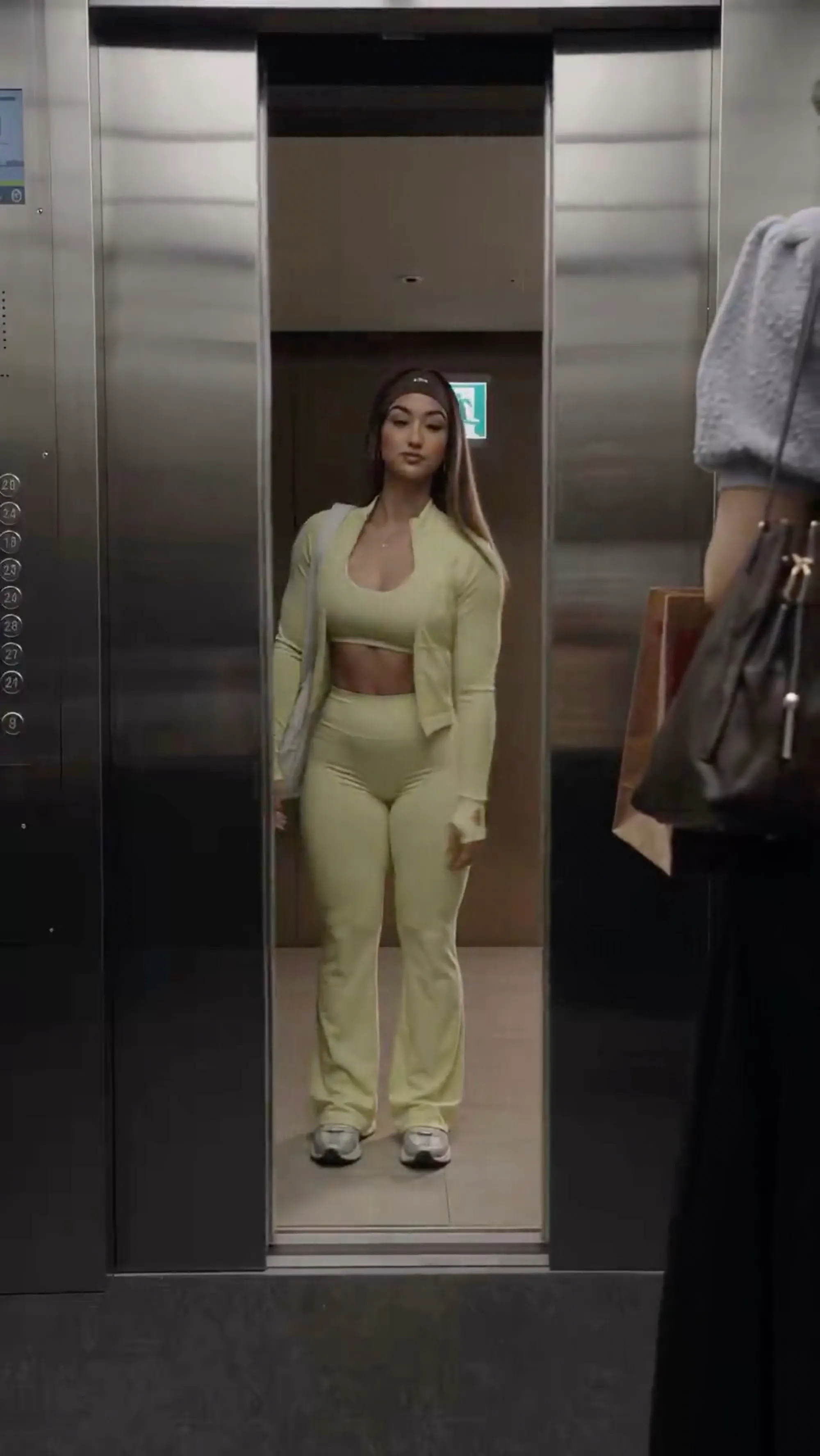
Activewear brand: AI-generated UGC video ad with a storyline
- Wrote a short storyline with a hook in the first two seconds and the product on screen…
- Generated a consistent AI model and scenes, with lip-synced dialogue and a natural…
- Edited for vertical placements with captions and a clear call to action
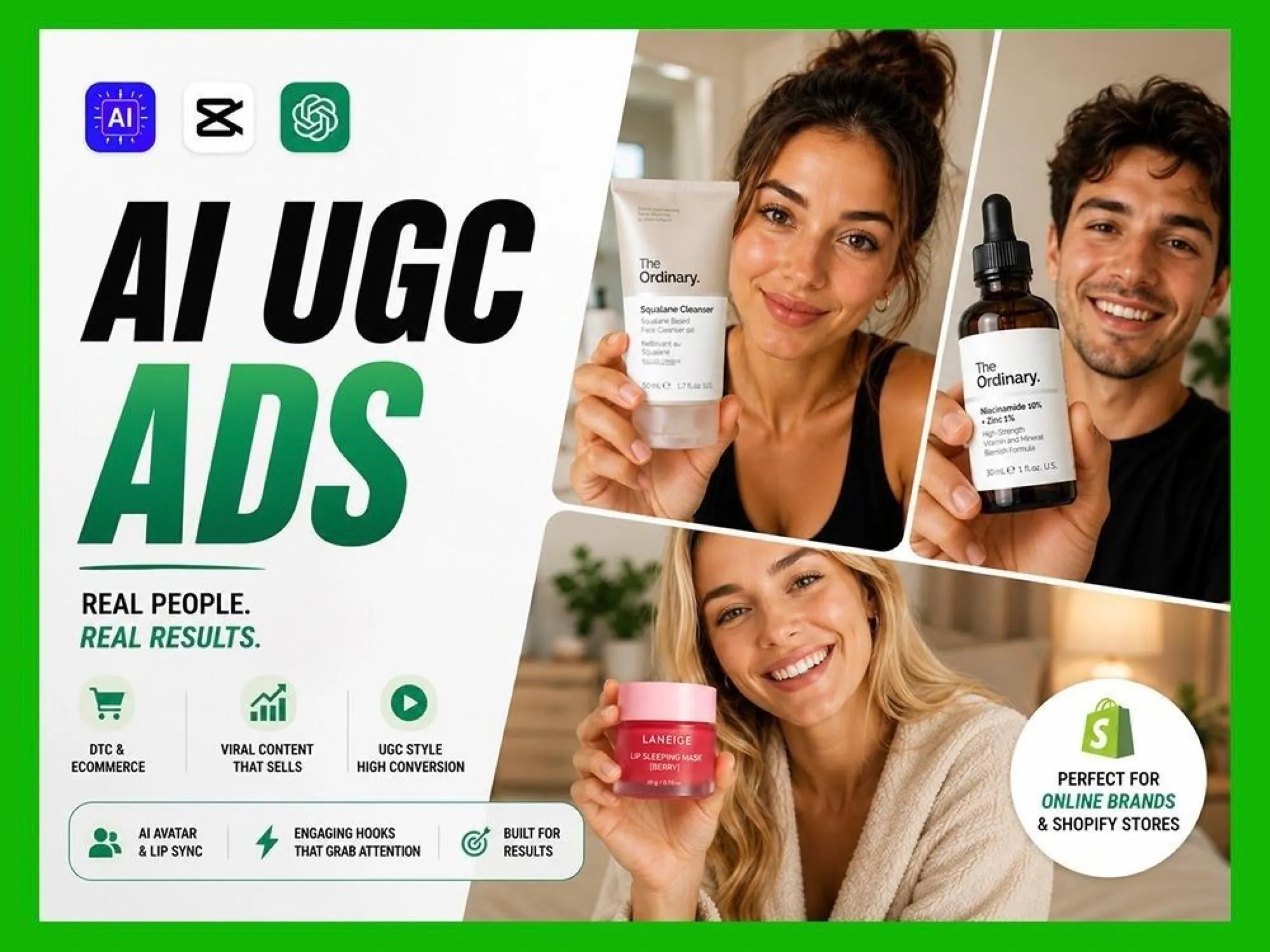
AI UGC ad creatives for skincare and DTC brands
- AI avatars and lip-synced presenters who review and demonstrate products like real…
- Hooks written to stop the scroll, tested in several variations per product
- Vertical and square cuts for Meta, TikTok and YouTube Shorts
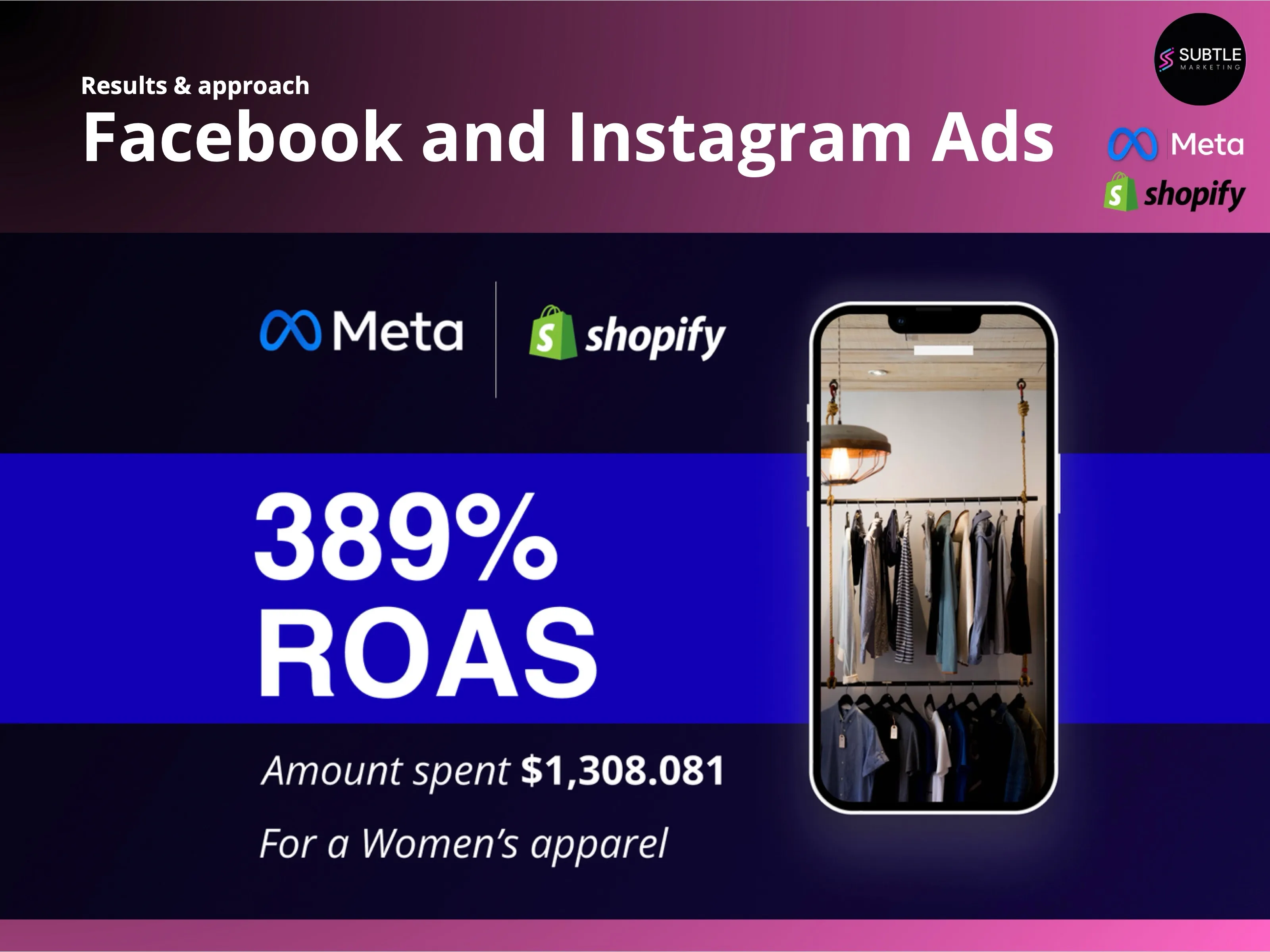
Blended return on ad spend
A Shopify women's apparel brand came to us with a 42% higher cost per conversion than target and campaigns that would not scale. Six months later the account was spending $26,849 a day at a 389% blended ROAS.
Read case study