
Lead generation for financial services, without a compliance fight
The ads get approved one week and restricted the next, the form fills look fine and sales says the leads are useless. Regulated lead generation needs a different build.
The ads were approved on Monday and the account was under review by Thursday. The form fills are arriving at a cost per lead the board is happy with, and the sales team says most of them should never have been passed through. Meanwhile the deals that do close turn out to have started with someone reading three of your articles in February.
That is the shape of regulated lead generation. Four things make it different, and each one changes a part of the build.
What makes financial services harder than it looks
Platform policy is a gate, not a guideline. Google requires advertiser verification and, for financial services in the UK, evidence that you are authorised by the FCA before your ads can serve. Several countries require additional certification for complex speculative products. Meta treats credit-related advertising as a special ad category, which strips out detailed interest targeting and limits how narrowly you can target by location and demographics. None of this is negotiable at the campaign level, so it belongs in week one of the plan rather than in a troubleshooting call later.
Targeting is restricted, so creative has to qualify. If you cannot build the audience, the ad has to repel the wrong person as efficiently as it attracts the right one. Say the minimum deposit, the fee, the eligibility criterion. A cheaper lead that fails on eligibility costs you a sales call.
The decision is long and researched. Prospects compare, read reviews, ask a forum and come back three weeks later. One ad and one form do not convert them.
They arrive already decided. By the time someone fills in your form, they have usually read a lot. The marketing that changed their mind happened before the click, and it will not show up in a last-click report.
Ad messaging that gets approved and still works
We write regulated creative to a short list of rules.
- Lead with the mechanism, not the outcome. “How funded trading accounts work” rather than a return figure. Specific income or return claims are the fastest route to a disapproval and, in most jurisdictions, to a regulatory problem as well.
- Put the qualifier in the ad. Minimum investment, who it is for, which market you are licensed in. This is the targeting you are no longer allowed to do in the audience builder.
- No implied knowledge of the person’s circumstances. Address the product, not the reader’s debt, income or situation.
- Risk language in the creative, not only on the landing page. It is a policy requirement in many categories and it also pre-qualifies.
- Brand search always on. In a long consideration cycle, people will search your name after seeing you elsewhere. Losing that click to a competitor’s bid is the most expensive mistake in the account.
- One claim per ad, evidenced on the page it lands on. If the page cannot substantiate it, the ad should not say it.
If your budget is below our usual $1,000 a month minimum, spend it on the pages and tracking first. Regulated campaigns need enough volume to learn, and a starved account in a restricted category never gets there.
The trust layer, which does the actual convincing
Paid media buys attention. In financial services it almost never closes anything on its own. What closes is the material a prospect reads while deciding whether you are real.
That layer is: a site that explains how the product works in plain language, your regulatory status and licence details where someone can find them without hunting, fee structures written out, named people with real credentials, and proof that is checkable. For professional services firms, local search carries a surprising share of this, which is the job we did when we rebuilt an accounting practice’s site and its local SEO in a crowded Virginia market. For product companies it is the site itself doing the explaining, as with the prop trading firm site we built for Elevate Talent, where the whole page is organised around the funding offer and what it requires.
Budget for this as part of the campaign, not as a later phase. Content and SEO in this category take three to six months to compound, so starting them on the same day as the ads is the difference between paid becoming cheaper over time and staying flat.
Gated, ungated, and the thing most firms get backwards
| Asset | Gate it? | Why |
|---|---|---|
| Methodology, how the product works, fee tables | No | This is the trust layer. Hiding it sends the buyer to a competitor’s version. |
| Regulatory status, risk disclosures | No | Should be findable in one click, always. |
| Calculator or indicative quote output | Yes | It needs their numbers to exist, so the exchange is honest. |
| Benchmark report or model with their inputs | Yes | Personalised, and a strong qualifying signal. |
| Template, checklist, onboarding pack | Yes, one field | Email only. Every extra field costs you completions. |
| Webinar or live session | Yes | Attendance is the qualifier, and the follow-up window is where it converts. |
The pattern: gate what is only useful with their details, publish everything that makes them believe you. If you are running the webinar route, the mechanics of registration rate, show-up rate and the follow-up window are set out in the webinar funnel numbers that matter.
Score the leads, do not just count them
A single lead list with a single response plan is why sales stops trusting marketing. Split the scoring in two.
Explicit fit, from what they tell you: product of interest, amount or company size, jurisdiction, timeframe, licence or eligibility status. Ask three or four of these, not twelve.
Observed behaviour, from what they do: pages visited, pricing page views, email opens and clicks, webinar attendance, return visits, time between first touch and enquiry.
Then route on both. High fit with high behaviour goes to a human inside minutes, because speed to lead decides who wins the enquiry in this category too. High fit with low behaviour goes to nurture plus a single human touch. Low fit goes to nurture only, with an honest note about eligibility rather than a sales call neither side wants.
Nurture over weeks, not days
A five-day email burst is built for a $40 purchase. Plan six to eight weeks, segmented by the first thing they downloaded, in roughly this order: how it works, who regulates it and how you are licensed, what it costs, what the risks are, what happened for people in their position, then a direct invitation to talk. Weekly is enough. Each email should be useful if they never reply.
Two things we insist on. Follow-up has to be logged somewhere other than an inbox, so nothing depends on one person remembering, which is the same discipline we describe for long real estate follow-up cycles. And every sequence needs an exit: a lead who says they are not eligible should stop receiving sales emails and start receiving nothing, or very little.
Measure to closed revenue, not form fills
Platforms optimise towards whatever you tell them is a conversion. Tell Meta that a form fill is the goal in a regulated category and it will find you people who fill in forms.
- Define conversion events at the stages that matter: enquiry, qualified, application started, funded or signed.
- Push CRM stage changes back into the platforms. Google Ads offline conversion imports and Meta’s Conversions API both accept them, and server-side event setups like the de-duplicated CAPI implementation we built through GTM are what make the numbers trustworthy.
- Report cost per qualified lead and cost per closed deal, with the lag stated. At a 60-day cycle, this month’s cost per deal describes campaigns you changed two months ago.
- Keep a first-touch view alongside last-click. In a researched purchase, the article that started it will never win a last-click report, and cutting it because of that report is a decision you will regret in a quarter.
What this looks like when we do it
We handle verification and policy first, then rebuild tracking to the application and funded stages, then launch intent search plus one educational social campaign while the content and the CRM and nurture system are built behind it. Campaigns go live within 14 days, in your accounts, and the first honest read on cost per qualified lead comes at the end of month one with the caveat that closed revenue lags.
The decision you are facing is whether you are optimising for the metric your platform can see or the one your finance team recognises. If you want a second opinion on which one your account is currently buying, book the free audit and keep the one-page plan regardless.
Common questions
How do you generate leads for financial services?
Capture existing demand with search ads on product and comparison terms, create demand with educational paid social inside platform policy, convert it with pages that explain the product and the risk honestly, qualify with scoring rather than a long form, and nurture over six to eight weeks because the decision takes that long.
Can you run Facebook and Google ads for financial products?
Yes, with verification. Google requires advertiser verification and, in the UK, proof of FCA authorisation for financial services ads, with extra certification for complex speculative products in many countries. Meta classifies credit-related ads as a special ad category, which removes detailed targeting options. Check each platform's current policy before you build.
What is a good cost per lead in financial services?
There is no useful benchmark across the category, because a current-account sign-up and a pension transfer are not the same purchase. The number to hold yourself to is cost per qualified lead and cost per closed deal in your own account over 90 days, which is why CRM stages need to feed back into your ad platforms.
Should financial services content be gated?
Gate what only works with the prospect's details, such as a calculator output, an indicative quote or a personalised model. Publish everything that builds trust: methodology, fee structures, risk disclosures, case detail. Gating the trust material means your buyer reads a competitor's version instead.
How long should a nurture sequence be for a financial product?
Six to eight weeks for most considered purchases, then a lower-frequency track after that. Content should answer objections in order: how it works, who regulates it, what it costs, what the risks are, what happened for people like them. Weekly is usually enough, and segmenting by first download matters more than frequency.
Proof from our work

Elevate Talent: prop trading firm website launch
- Designed a dark, high-contrast interface around the funding offer
- Built the site in HTML and CSS for speed and full control
- Supported the launch with branding and marketing assets
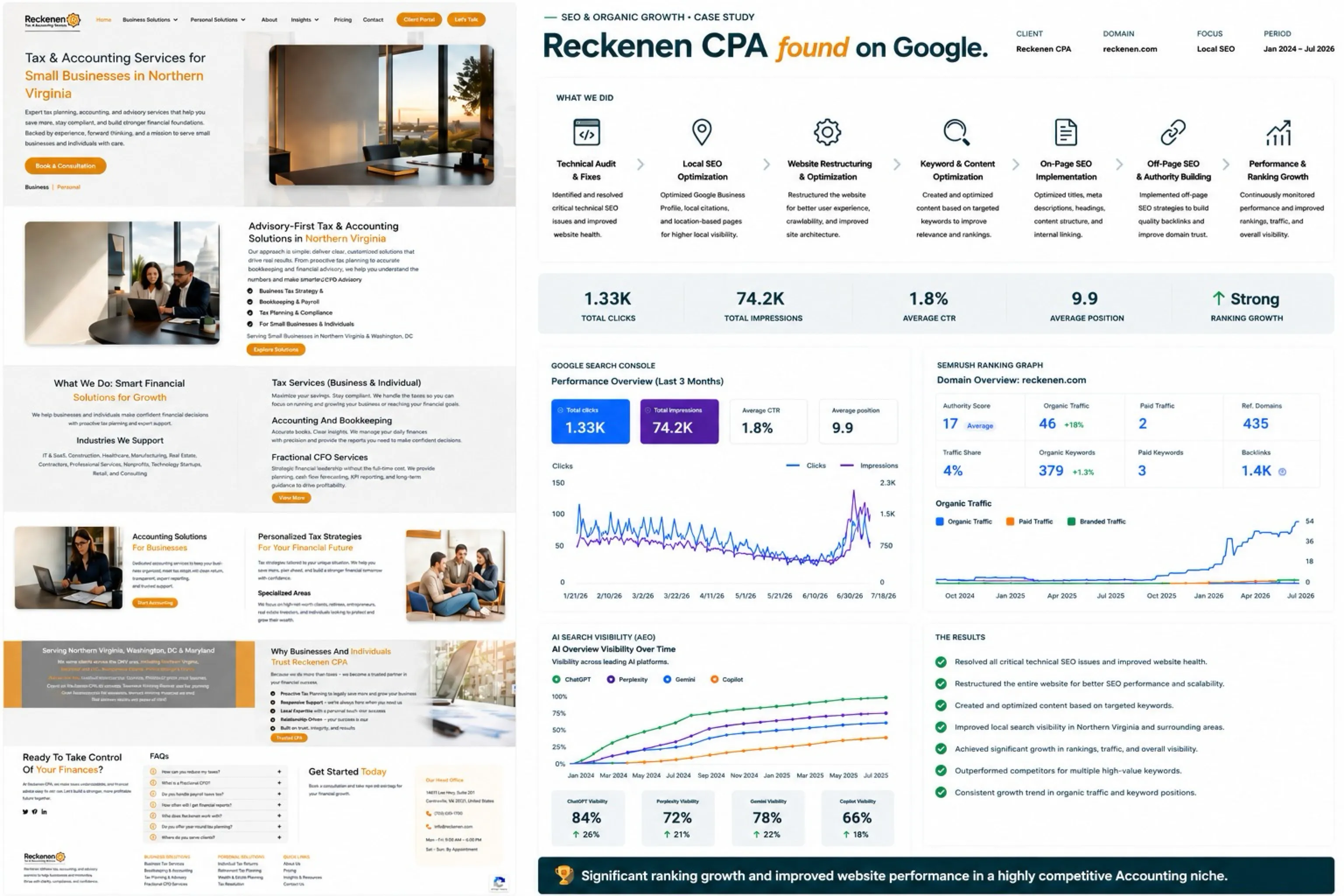
Local SEO and WordPress rebuild for a Virginia accounting firm
- Fixed technical SEO issues and restructured the site's architecture
- Researched target keywords and rewrote service pages around search intent
- Rebuilt key pages in Elementor with proper headings, schema and internal links
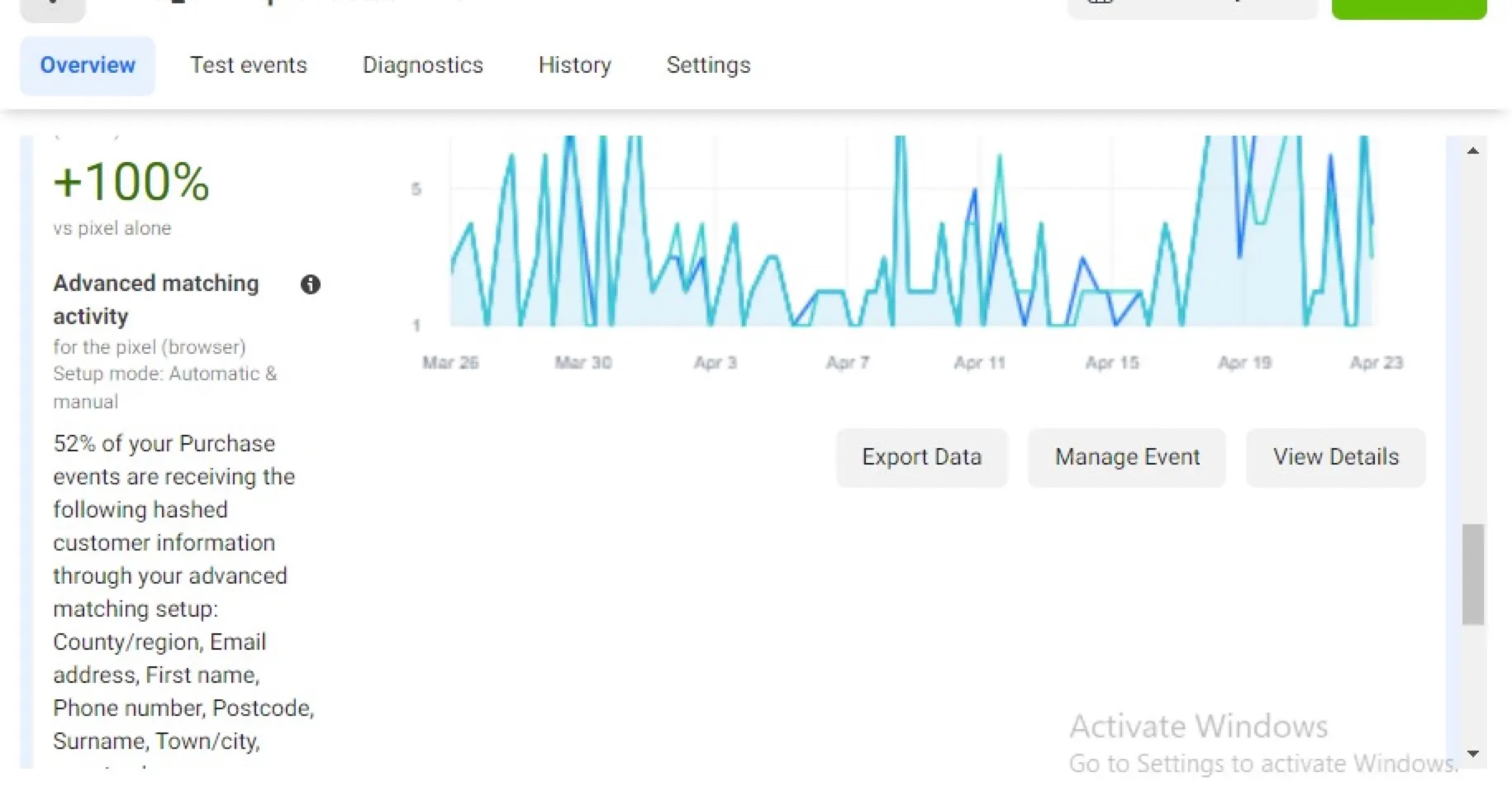
Meta Conversions API and GA4 server-side tracking via GTM
- Deployed a server-side Google Tag Manager container and routed GA4 and Meta events…
- Implemented the Meta Conversions API with event deduplication so browser and server…
- Enabled advanced matching so hashed customer data (email, phone, name, location)…