
The follow-up system property enquiries actually need
Property generates more enquiries than any agent can work, and most of them are not ready now. Agents chase the loudest and the rest quietly expire.
Property is unusual: the ads work long before the business does. A decent campaign produces more enquiries than your agents can ring, so they call the people who shout loudest, and everyone else sits in a spreadsheet until the interest dies. Then the campaign gets blamed for expensive leads.
Why property enquiries go cold faster
Three things make property different from almost every other lead-gen category.
Enquiry volume is high and intent is thin. A single listing or project ad collects people who are buying this month, people planning for next year and people who clicked because the kitchen looked nice. All three arrive through the same form.
Buyers enquire in parallel. The same person messages four agents about four listings in one evening. Whoever replies first and credibly gets the conversation, and the rest get ignored, however good their property was.
And the sales cycle outlives everyone’s patience. A buyer who is nine months from a mortgage approval is not a bad lead. They are a lead whose follow-up has to survive nine months, which nothing manual ever does.
Minute one: the automatic first reply
Every enquiry gets a reply within five minutes, sent by the system, not by a person. Not “thanks, an agent will be in touch”. A reply that does three jobs: confirms what they enquired about by name, answers the question they were always going to ask next, and offers two specific viewing slots.
Build it on whichever channel they came through. For Meta instant forms and website forms, that means SMS and email together, and WhatsApp where you have opt-in, because in most of our markets WhatsApp is where the actual conversation happens. A WhatsApp or web AI assistant can carry the whole exchange: it answers price, availability, floor plan and location questions from your own project data, and only pulls in a human when the question is one a human should answer.
This is the single highest-return change in most property accounts, and the general case is covered in why speed to lead decides who wins the deal.
Qualify on four fields, not fifteen
Long qualification forms do not qualify; they filter out everyone polite enough to be worth calling. Ask four things, one at a time, in conversation:
- Budget band. Ranges, not an exact figure. People will pick a band and refuse a box.
- Area or project. Which development, which neighbourhood, or how far from a named landmark.
- Timeline. Buying within 3 months, 3 to 6, 6 to 12, or just researching.
- Finance status. Cash, mortgage pre-approved, mortgage not yet started, or needs advice.
Those four fields drive everything downstream. Pre-approved and buying inside three months goes to an agent immediately with a visit offered in the same message. Researching with no finance started goes into nurture and does not get a call that annoys them both.
Store them as proper CRM fields with fixed options, never free text. A field you cannot filter on is a note, and notes do not trigger automations.
Book the visit inside the conversation
A lead that agrees to “a call to discuss” has agreed to nothing. Go for the site visit while you have their attention, and remove every step between intent and a diary entry.
- A live calendar showing each agent’s real availability, so the slot offered is a slot that exists.
- Two options in the message, not a link to a page with twelve.
- An automatic confirmation with the address, a map link, the agent’s name and photo, and what to bring.
- Reminders 24 hours and 2 hours before, with a one-tap reschedule, because reschedules are far better than no-shows.
- An automatic follow-up two hours after the visit while the property is still fresh.
The reminder stack is dull and it is where attendance comes from. It is the same pattern that fills a clinic diary, and property behaves no differently.
The long nurture for buyers six months out
Most of your pipeline is here, and most agencies have nothing for it. Four emails over two weeks then silence means the lead is cold on the exact day they become ready.
Build a sequence that runs for up to a year:
- Monthly, something useful. New listings matching their saved area and band, price movements, a payment-plan explainer, the stamp duty or transfer-cost reality for their situation.
- Quarterly, a question. “Still looking in the same area, same budget?” One tap to say yes, no, or it has changed. Answers update the CRM fields and move the lead’s cadence.
- Event triggers. A new unit in their project, a price drop in their band, or a launch in their area goes out the same day. These outperform anything scheduled.
- One exit each way. A reply or a link click on a specific listing escalates them to an agent within minutes. Three ignored quarterly checks moves them to dormant, so the active pipeline stays honest.
A real estate client of ours runs exactly this, with a 365-day automated nurture after sign-up behind a Google Ads campaign that produced 135 buyer leads in its first month and settled at around 75 a month. The nurture is the reason month one’s leads are still worth something in month eight.
Agent accountability and pipeline hygiene
Automation fails when there is no human consequence. Four rules we put into every property CRM build:
| Rule | How it is enforced |
|---|---|
| Every lead has one named owner | Round-robin on assignment, visible on the record, no shared queues |
| First human contact within 30 minutes in working hours | Timestamp recorded automatically, breaches shown on a daily list |
| No lead sits with no next action | A task is created on assignment and cannot be cleared without an outcome |
| Nothing stalls silently | 7 days of no activity reassigns the lead and notifies the manager |
| Stages mean one thing each | Fixed definitions: New, Contacted, Qualified, Visit booked, Visit attended, Offer, Closed |
Stage discipline is the one people skip. If “Qualified” means whatever each agent feels, your pipeline report is fiction and you cannot tell a lead-quality problem from a follow-up problem. Define each stage in one sentence, write it in the CRM, and audit twenty records a month. This is the bulk of what a CRM and sales funnel build actually consists of, as in this GoHighLevel setup for leads and bookings.
Count booked visits, not form fills
Report on five numbers weekly and let everything else go:
- Median time to first response, split by automated and human. Target under 5 minutes and under 30 minutes.
- Contact rate. Share of enquiries that produced a two-way conversation.
- Qualified rate. Share with all four fields completed.
- Visits booked and visits attended. The second is the real one.
- Cost per booked visit. Ad spend divided by booked visits.
Cost per lead is a vanity figure in property. A campaign at a low cost per lead that books nothing is worse than an expensive one that fills the diary, and you only find out which you have when visits are the denominator.
What this looks like when we do it
On a commercial real estate programme we ran an instant-form campaign with qualifying questions, tested four angles in week one and moved budget to the two winners, and wired automated follow-up so every lead got a message within minutes. That produced 167 leads in a month at $1.57 per click on roughly $1,100 of spend. The campaign is the easy half; the follow-up is why the leads turned into conversations instead of a list.
Where to start
Measure one thing tomorrow: the median gap between your last fifty enquiries arriving and the first reply going out. If it is over an hour, the instant response and the calendar link are worth more than any new campaign, and the automation pillar covers how we build them. If response time is already tight and visits still are not happening, the problem is qualification or agent accountability instead. Our real estate page shows the full programme, and the free audit will tell you which of the three is costing you most.
Common questions
How fast should you respond to a real estate lead?
Within five minutes, and automatically. Property buyers enquire on several listings at once, so the first credible reply usually wins the conversation. An automated first response that confirms the enquiry, answers the obvious question and offers two viewing slots buys your agent the time to follow up properly.
What should you ask a property enquiry first?
Four things: budget band, preferred area or project, when they want to move, and how they are funding it. That is enough to route the lead, decide whether to push for a visit now and set the follow-up cadence. Collect everything else at the viewing.
How long should a real estate nurture sequence run?
Up to a year. Many enquiries are six or more months from a decision, so a four-email sequence simply expires before they are ready. We build sequences that send monthly value, new listings in the saved area and price changes, with a re-qualification check every quarter.
What should a real estate agency measure instead of leads?
Booked site visits and attended visits, plus median time to first response, contact rate and cost per booked visit. Form fills measure how well your ads work; booked visits measure whether anything happened afterwards, which is where most agencies lose money.
Proof from our work
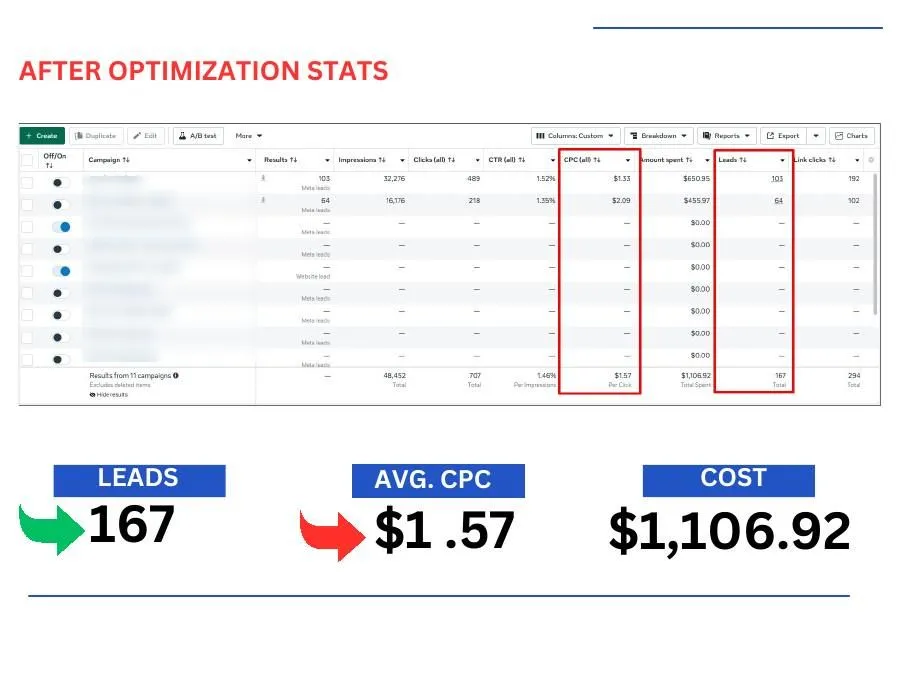
In one month at $1.57 CPC
A commercial real estate training programme needed a steady flow of motivated agents. Our Meta ads campaign delivered 167 leads at an average CPC of $1.57 on a total spend of $1,106.92.
Read case study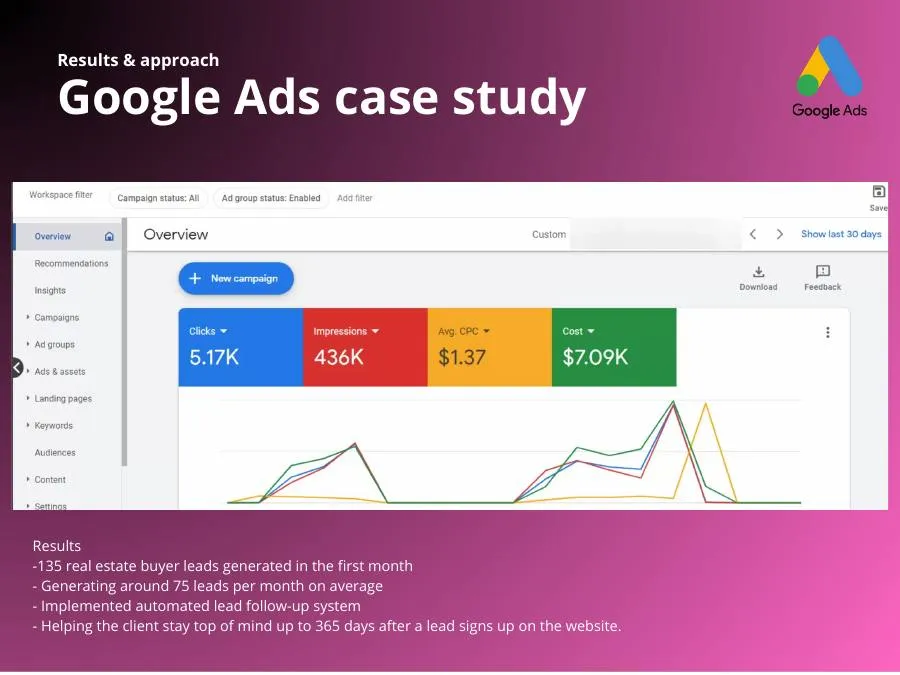
In month one, then ~75 a month
Our Google Ads campaign generated 135 buyer leads in its first month and sustained around 75 per month. An automated follow-up system keeps leads engaged for up to 365 days after sign-up.
Read case study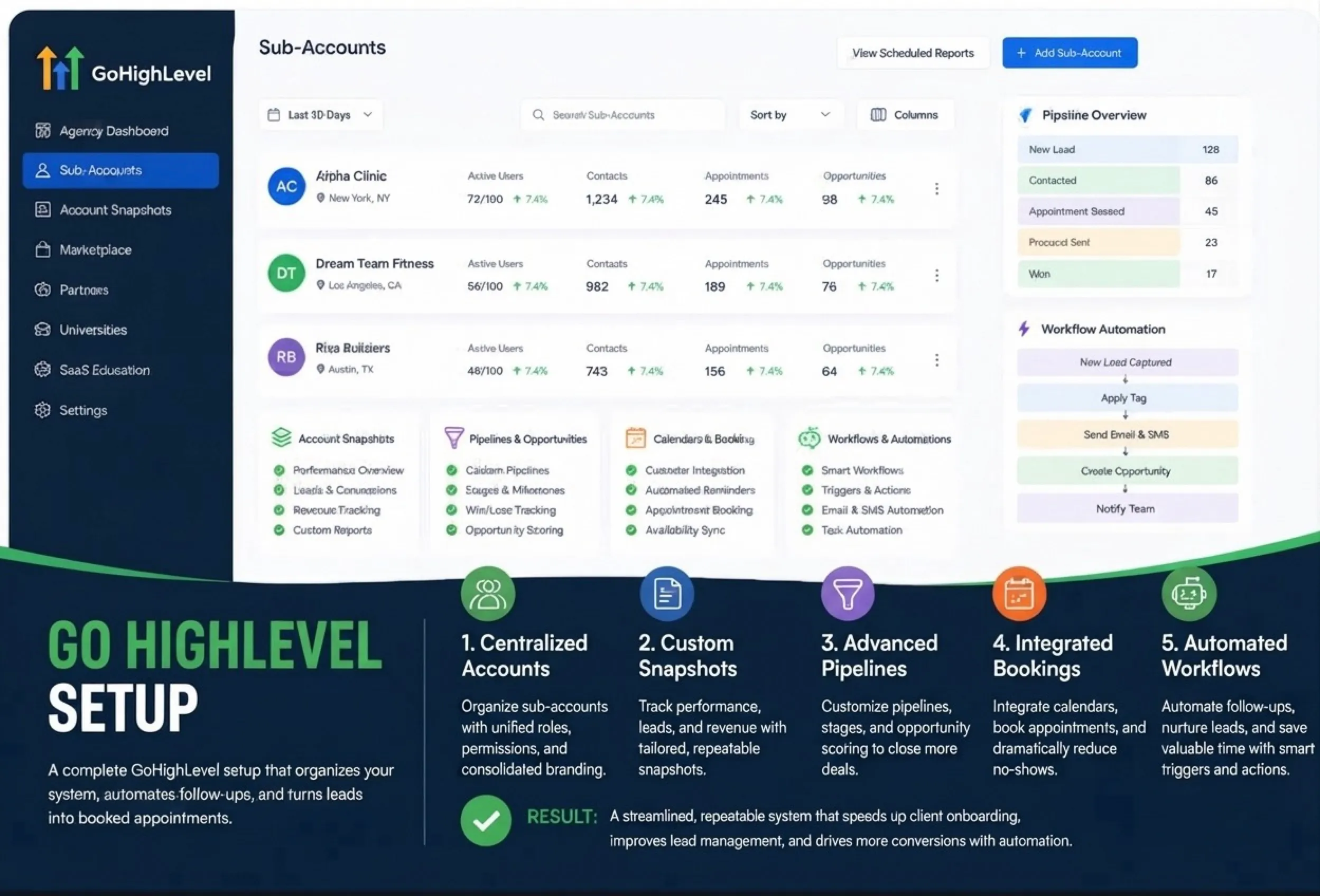
GoHighLevel CRM setup for leads, bookings and team follow-up
- Account structure, sales stages, calendars and contact data organisation
- Automated email and SMS journeys for new leads and booked appointments
- User access, tags, custom fields, task alerts and conversion tracking